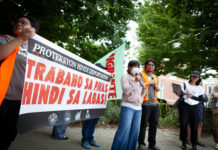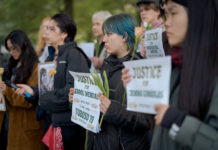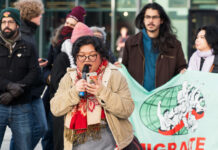

Migrante Netherlands stands with the victims of Rodrigo Duterte’s bloody war on drugs in the continuing struggle to hold him accountable for crimes against humanity. We stand with our fellow Filipinos who lost their loved ones, with the communities terrorized by state violence, and with all those who continue to demand justice despite despite the efforts of Duterte’s legal and propaganda machinery using flimsy justifications and hollow arguments to avoid court proceedings.
As migrant Filipino workers, we understand that Duterte’s war on the poor was not limited to the streets. His war on the poor was also embedded in the economic conditions that continue to force millions of Filipinos to leave the country every single year.
The Duterte regime abandoned OFWs in a time of great need. Under his administration, thousands of Filipinos died during the COVID-19 pandemic which was filled with corruption and incompetence because his flagship priority was the “war on drugs” above all else. During Duterte’s six years in power (2016-2022), Filipino migrant workers faced persistent and worsening problems from the chronically low wages and lack of secure jobs at home. Many of us lost jobs overseas due to slowdowns and shutdowns and nothing to come back to in the Philippines. Many got stranded in-transit returning to the Philippines. The processing of returning OFWs was slow due to incompetent handling and corruption including the insufficient and overpriced PPEs (Personal Protective Equipment), mismanagement of quarantine facilities nationwide, and the Php11.5 B Pharmally scandal.
Instead of strengthening domestic industries, agriculture and public services to create livable jobs in the country, Duterte prioritized the militarization of the countryside and his so-called “war on drugs.” Billions of Filipino taxpayers’ money were funneled into security forces while hospitals, schools, and social services remained underfunded.
Duterte “war on drugs” which claimed the lives of more than 30,000 people was in reality a war on the very communities most affected by unemployment, low wages, and severe economic inequality. Through the spectacle of killing mostly the urban poor and small time drug users, Duterte diverted attention away from the structural causes of poverty.
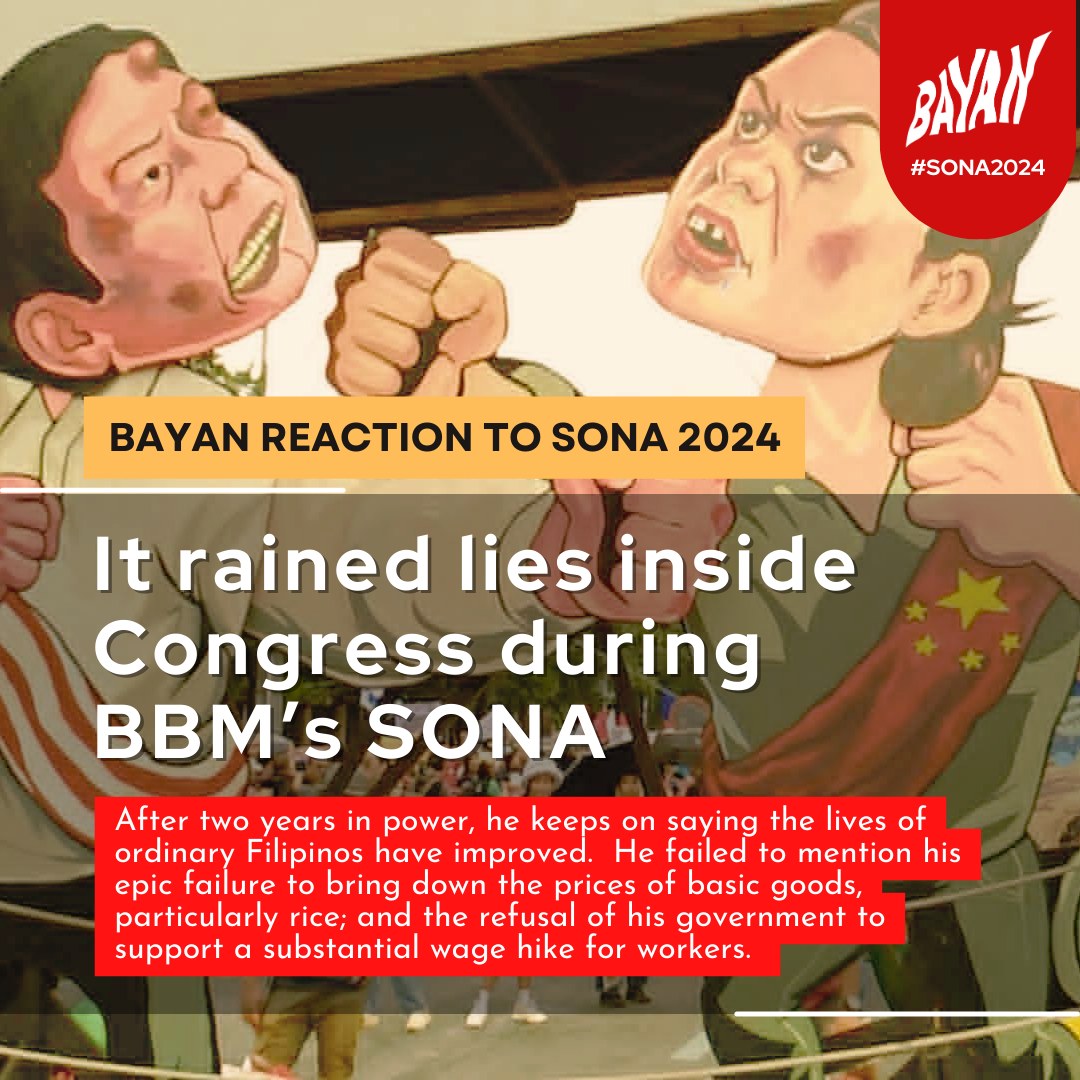
This pattern of governance persists under the Marcos Jr. administration. Despite promises of economic stability (and the promise of Php20 rice per kilo), the cost of living continues to rise, wages remain insufficient, and unemployment and underemployment continues to push more and more Filipinos to seek work abroad. The labor export industry has increasingly been used as the main source of government revenue.
At the same time, justice remains elusive. Mary Jane Veloso, a Filipina migrant worker and victim of human trafficking, has been imprisoned for more than 14 years. Her case symbolizes the vulnerability of Filipino workers abroad and the Philippine government’s failure to protect us.
Meanwhile, corruption continues to drain public resources that should be used for job creation, social protection, and essential services. From questionable budget allocations to discretionary funds, the system remains one where the powerful enrich themselves while ordinary Filipinos bear the burden of inflation, spiraling debt, and forced migration.
This current corruption has seeped into every aspect of society, from private contractors, public officials, congress, Senate, the courts, and the government itself. The current massive corruption under the Marcos Jr. administration by the well entrenched bureaucrat capitalists has worsened unemployment, delivery of health, education and social services as well as the unabated high cost of living. This has further forced more Filipinos to leave the country and face the risk of exploitation and discrimination overseas.
For Filipino migrant workers in the Netherlands, Duterte and Marcos Jr. both represent the same system that exports labor instead of creating dignified jobs at home, the same system that represses resistance instead of addressing inequality, and the same system that tolerates corruption while Filipino families are torn apart by forced migration. We must challenge not just corrupt individuals, but the entire system that breeds corruption and impunity.